Paddington Track League Reunion
Nature's Symphony
Faces of Humanity

Sands of Time

Beyond Boundaries
Reunion Celebration Thursday 6th August 2026
Situated by the gates of Paddington Recreation Ground, Carlton Vale, NW6 'Carlton Tavern' has been an integral part of West London cycling scene for over 100 years and past-owners Charringtons supported racing as well as quenching thirsts after a hard evening's track acing on Tuesday & Friday during summer months.
Built in 1920 the pub survived heavy bombarded in WW2, coming away fully intact however suffered partial demolition in 2020 from new owners who applied to Westminster Council to demolish and rebuild as flats. Westminster refused stating 'Carlton Tavern' was a historic feature in a landscape of high-rise flats surrounding it and would be awarded Grade 2 listing immediately.
Next day locals awoke to the sound of a contractors wrecking ball smashing into the upper floors and contacted Westminster immediately who ordered an immediate halt to proceedings. The new owners were taken to court and ordered to rebuild the pub brick by brick back to it's former glory.
'Carlton Tavern' opened for business in April 2021 under ownership of two local people (one attended
Brad Wiggins old school St. Augustines although they never met).
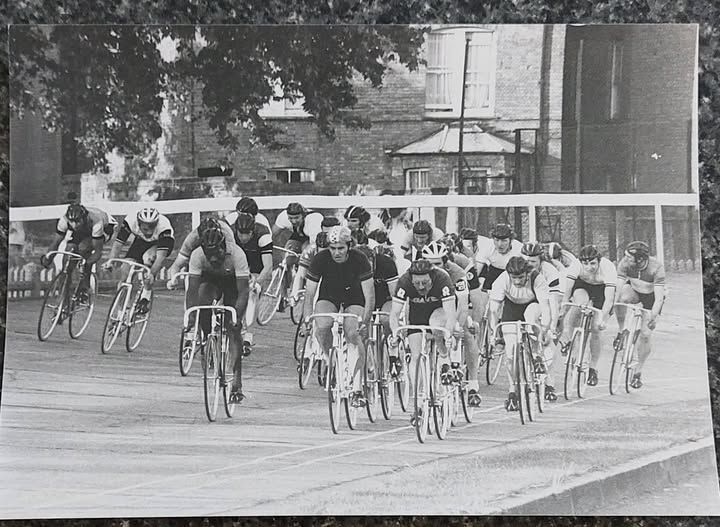
Paddington's final meeting was held on 9th August 1988 and the first reunion last year to celebrate 35 years. It proved to be very popular and recently repeated again this year. Tuesday's track League provided hard racing for riders in and around London however Friday's '100' races gave an opportunity to rub shoulders with World class riders like Hugh Porter & Les West in a series of 4 x 25 mile races sponsored by Charringtons which led to future sponsors like Curry Sark whisky, Chrysalis Records and Pernod getting involved.
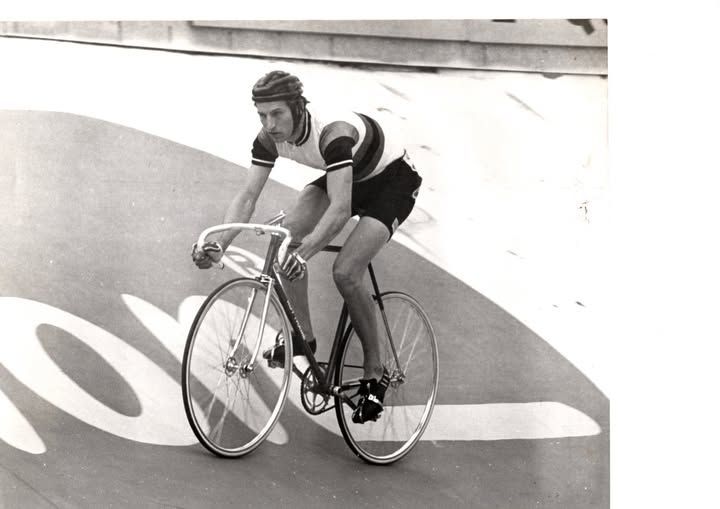
Paddington Track has disappeared (part of the banking coming into the home straight is still here) but memories remain and can't be erased as long as the yearly reunion continues which is already being planned for 2025
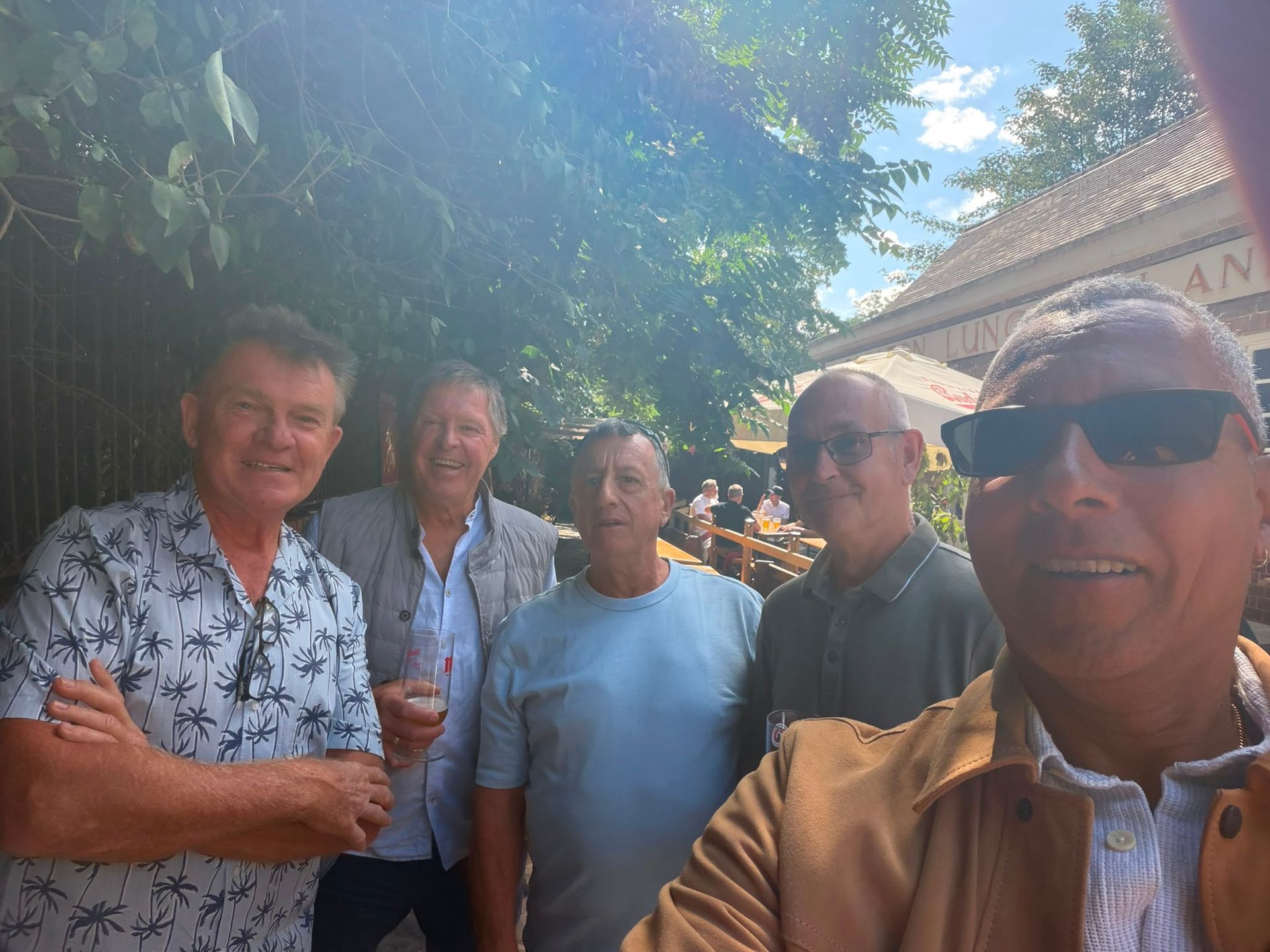
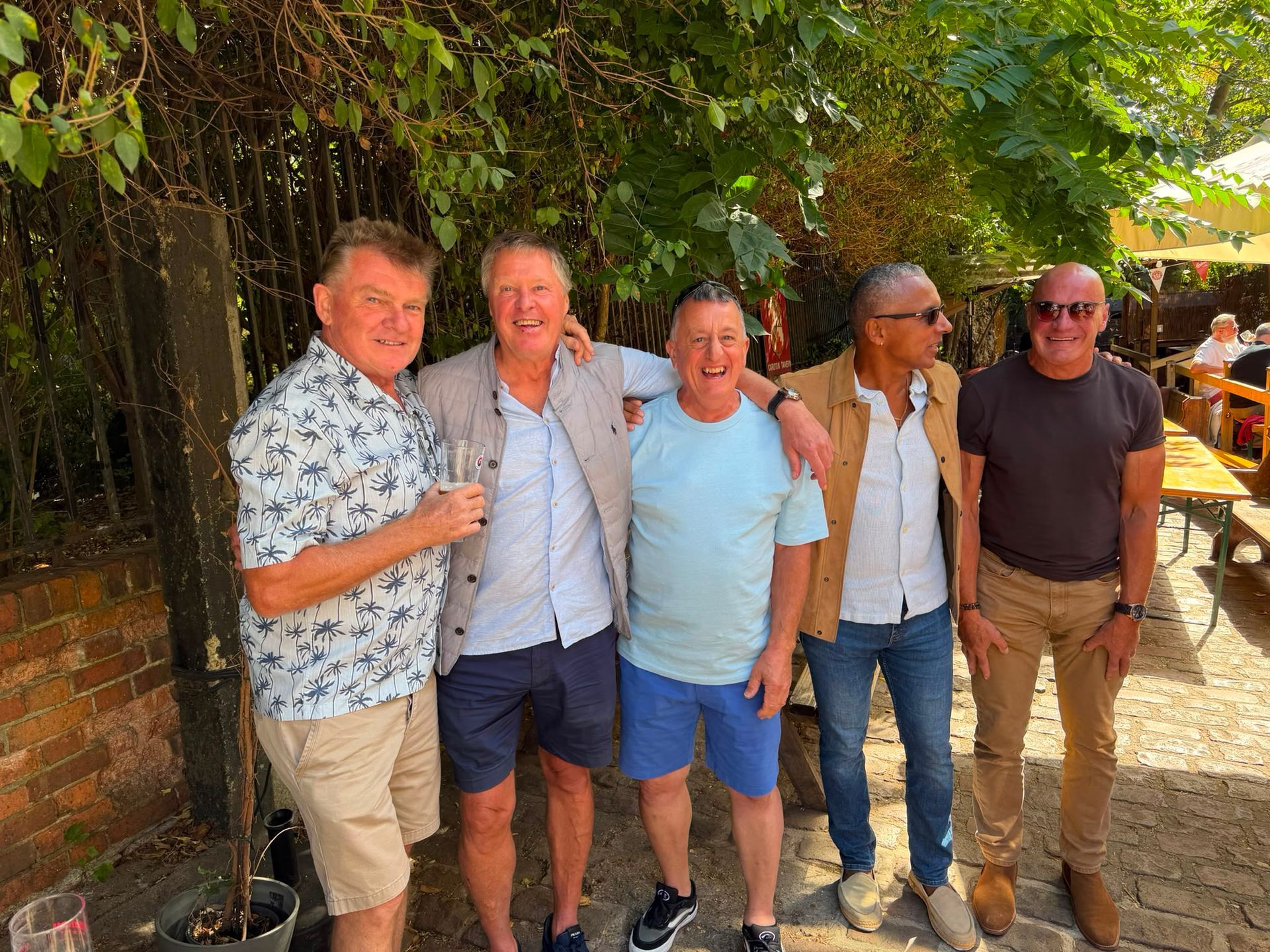
Paddington Track's final meeting was held on 9th August 1988 and last year celebrated 35 years from it's closure with a celebration at the iconic 'Carlton Tavern' pub by the gates of Paddington Rec.on August 15th
Over thirty riders and supporters made it a memorable day which will be repeated on Friday 9th August.
All are welcome to share drinks & memories from 1300 hrs onwards. Please bring along any artefacts, photo's, numbers etc. and share the experience of something which was part of our sporting lives for many years.



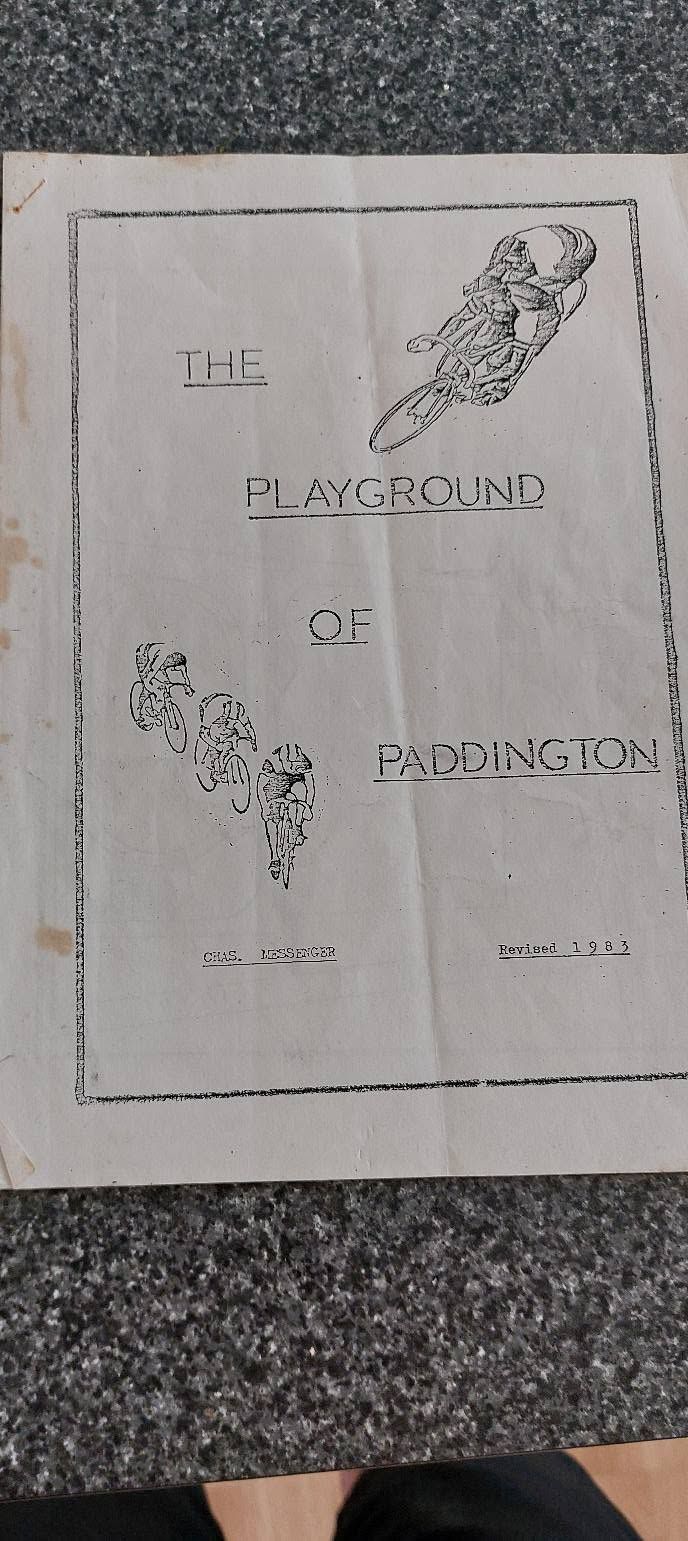


I have digitised the report by Chas. Lessenger the original in above
Chas. Lessenger
Revised 1983
THE PLAYGROUND OF PADDINGTON
The Paddington area catered for mostly manual workers on the Great Western Railway, their local being a somewhat smaller "Tavern" where the Carlton stands today. Behind this was "the Cricket Pitch", the pride and joy of the Reverend Walter Abbott, Vicar of Paddington who had been instrumental in having the pitch laid out of church funds at the turn of 1860.
THIS WINTER OF 1887 was indeed a terrible one, a number of people dying through the bitter cold and causing, as it did, a considerable amount of unemployment.
IN NOVEMBER of that year, Lord Randolph Churchill called a conference in the district for the purpose of raising help for the unemployed. Most of the Committee were members of the Paddington Parliament which met every week to discuss local details.
MR. BEACHCROFT was a member of the Small Committee which was formed and he wrote to the Conference offering to rent an additional plot of land alongside and adjoining the then existing cricket ground provided that part of the relief fund was used to pay for drainage, fencing and layout of the land to form a cinder track for athletics and cycling.
A FORMAL agreement was entered into between Mr Beachcroft and the Reverend Walter Abbott, Vicar of Paddington and Chairman of the Committee of the Fund for the Paddington Unemployed.
CLAUSE 4 of the agreement was as follows:
"That the works undertaken shall comprise fencing, drainage, and levelling the ground, and preparing same for games and athletic exercises, including the laying of a track round the inside of the field, available both for bicycles and tricycles and for promenading and including, if found proper, a pavilion or other convenient erection."
EMPLOYMENT was found for 500 men, who worked as many hours as there was daylight for 5d (fivepence old money) an hour during the ten weeks the work was in progress. During the course of the work 35,000 yards of clay was removed; 2,800 yards of ballast; 40,000 loads of rubbish and 1,300 yards of ashes laid to form the ground.
IN ADDITION to the well-turfed cricket field and tennis courts a splendid cinder cycle track was constructed under the direction of Messrs Fred Jenney and Pedrop of the Little Bridge Grounds and a handsome pavilion with a terraced roof erected by Mr F.T. Chinchen, builder of Kensal Green from plans by Mr Webb, the Great Western Railway Architect and Surveyor.
Page 2
The work was completed early in April, 1888, and the opening ceremony was performed by His Royal Highness, the Duke of Cambridge, K.C. and no less a newspaper than the London "Times" published a long and leading article on the occasion which included references to:
"the need for open spaces ..... a recreation ground that promised to pay its way and even yield a handsome return to its promoters, with athletic, football and cricket fields, together with an excellent cycling track ..... conveniently situated ..... the unemployed who were paid to lay out these 11 acres were engaged upon a reproductive work in which their employer might well have been some private speculator instead of Mr Bancroft ..... the grounds supply pedestrians and cyclists with sorely needed recreational facilities."
THE PADDINGTON CRICKET CLUB celebrated this outstanding event with an outstanding dinner at the Lord's Hotel, St. John's Wood, with nine courses on the menu, two after-dinner singers and a comedian, and in all twenty speeches were made.
THE INAUGURAL CYCLING and sports meeting was held on Saturday, 26th May, 1888, there being three events for bicyclists and three for the athletes.
The 880 yards handicap was a sizzling affair being won in the last half-lap by Mr F.J. Osmond, Brixton Ramblers, with Mr A.E. Langley, Kildare Bicycle Club, three bicycle lengths away, 2nd, and Mr R. Revell, Belsize Bicycle Club at the same distance third.
AN ATTEMPT was made on two tricycle records and both of these failed miserably.
THEN came the Amateur Bicycle Championship which was won in fine style by Mr Herbert Syme, Boulevard Cycling Club.
BUT THE NEW innovation was the One mile dwarf bicycle handicap with a total of 42 entries, and with 37 coming before the Starter. After a steady start the last lap turned out to be a ding-dong battle all the way with W. Price, Polytechnic Cycling Club getting the verdict by three yards from E.J. Willis, Finchley Harriers, with W.C. Jones, Polytechnic C.C. third, a further two yards back.
THE EVENTS were run under the new National Cyclists Union rules, and Mrs A.E. Beachcroft kindly presented the prizes.
THE FIRST SEASON was so successful as to amplify the remarks that had been made in "The Times" newspaper; the tennis courts were thronged; competition amongst local cricket clubs to secure pitches was very keen, and the cycling track acquired the reputation of being the best within easy reach of the City of London.