THE PEDAL CLUB
A (very) Random Assortment of interesting Images
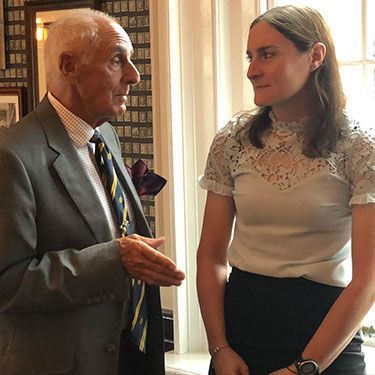
Eileen Sheridan welcomes Mrs Jean McClintock to a Pedal Club lunch.
Jean McClintock (born 1880) as a child of eight, watched her father, J.B.Dunlop, making
the very first pneumatic tyres. A great picture by any standard, it gives a hint of Eileen’s natural charm. It might be said that she was, de facto, the first woman member of the club since she was such a frequent visitor in the fifties.
She was elected an honorary life
member in 2022.
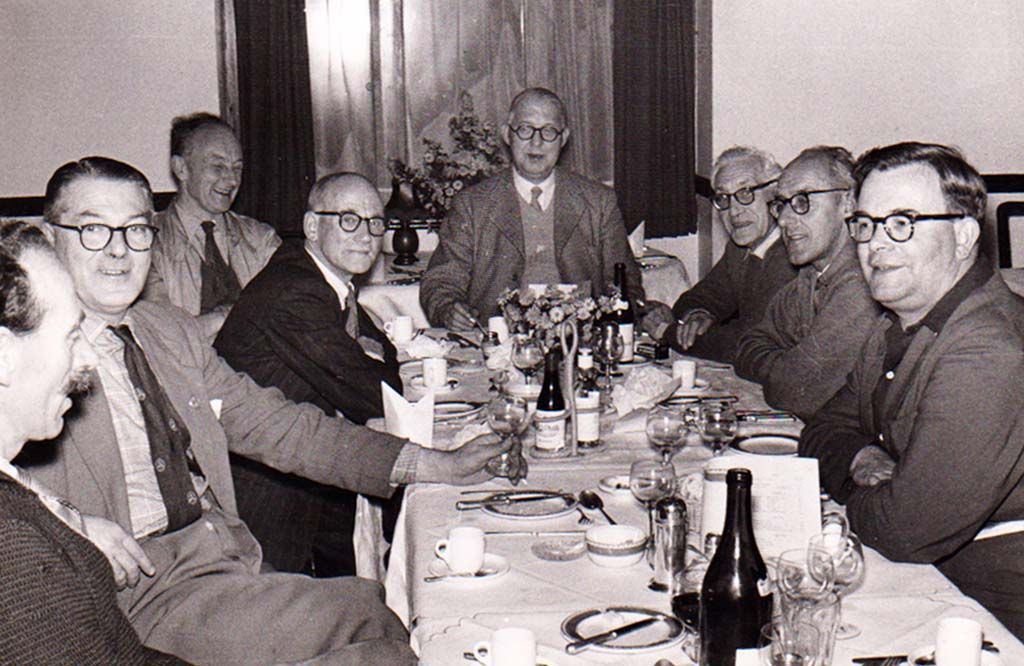
On the middle table, facing the camera, are two key members: centre G.H.Stancer (glasses, moustache) and to his right, H.H. England (glasses, cigarette), then editor of Cycling (now Cycling Weekly).
This was probably the most important single meeting in the history of the club. Strauss’s message was that massed start road racing was undesirable and would not be allowed by his government. This was exactly the line which GHS and Cycling were taking at the time, and the magazine reported the speech word for word. In fact the government did nothing to stop road racing.
‘monochromed’ to give a comparison with the older lunch photos. Facing the camera are (far table) Alan Fidgett, Keith Penfold and Tony Mack, and foreground, Ian Why (partially
obscured) and Ray Kelly.
Jean Bobet speaking at a PC lunch in 1961. also in the pic are two journalist members, Jock Wadley and Harold Briercliffe
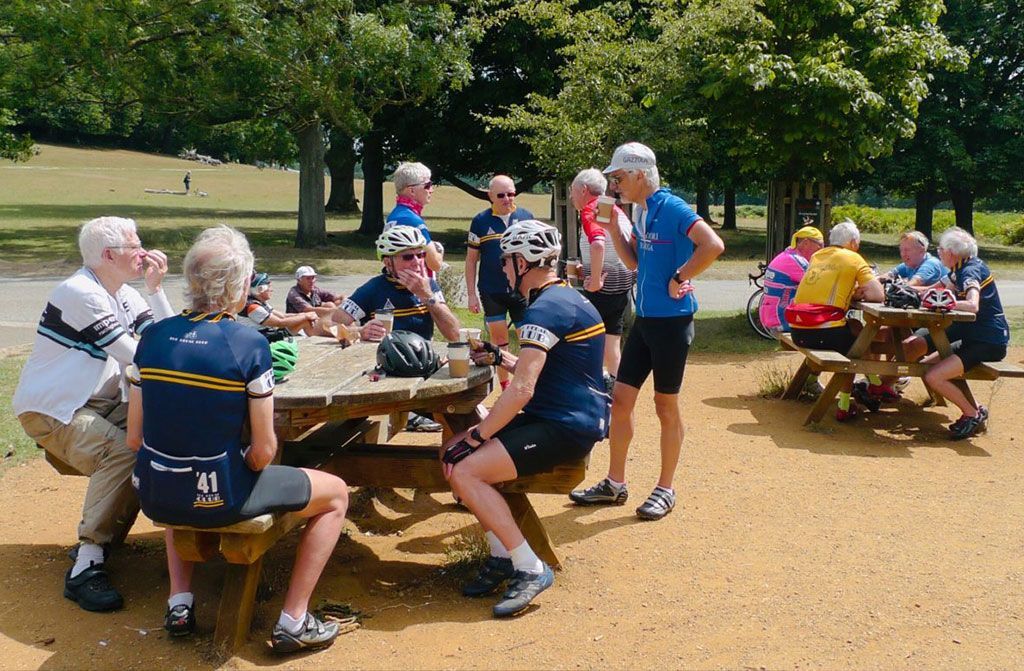
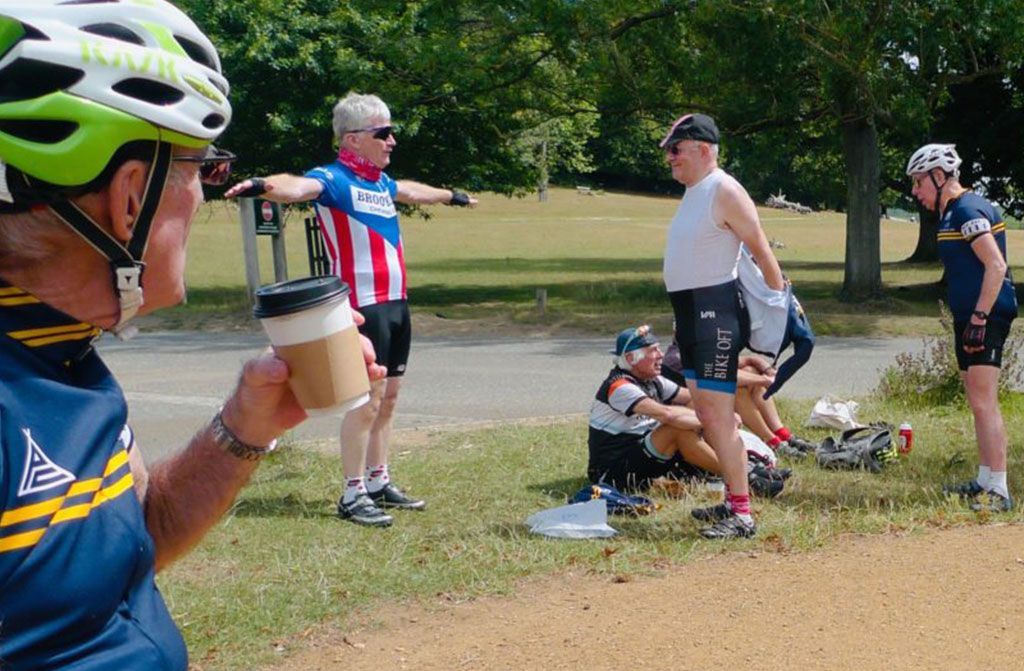
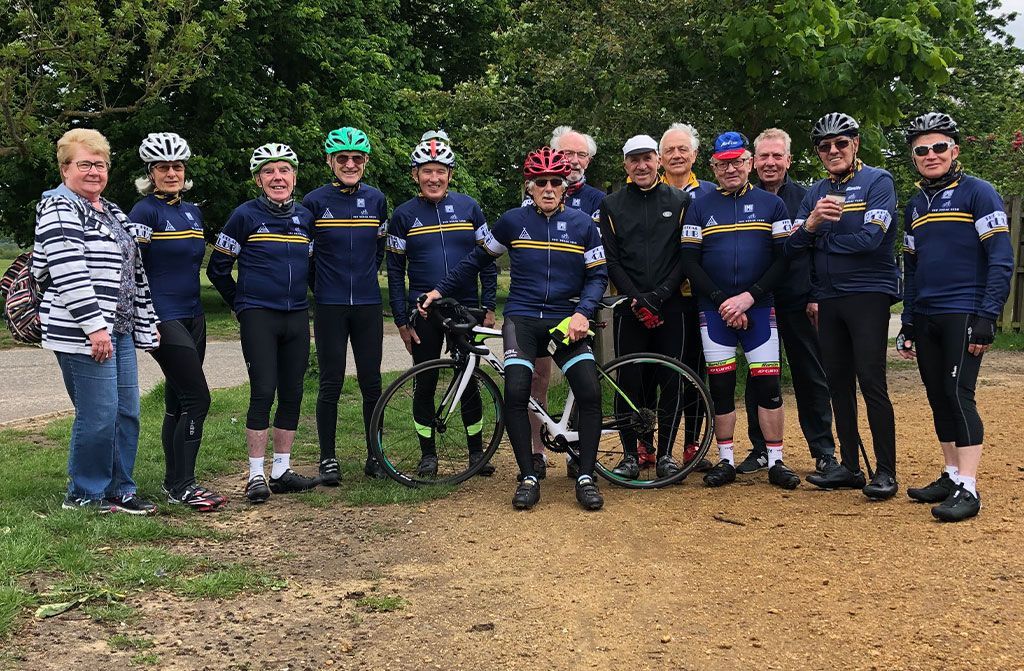
Richmond Park 2020
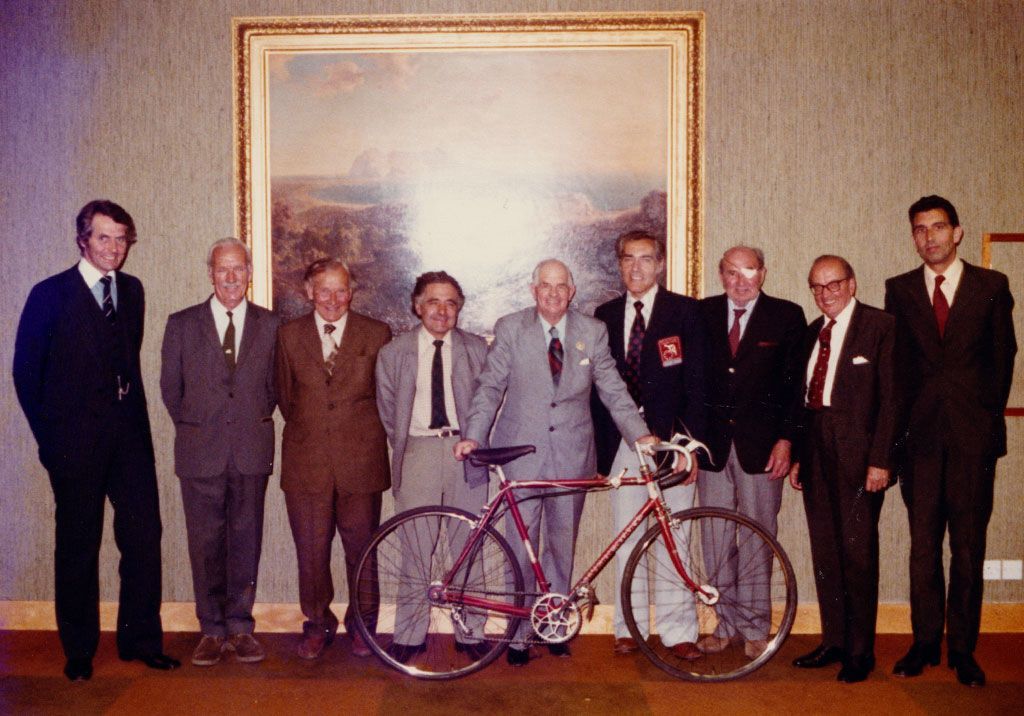
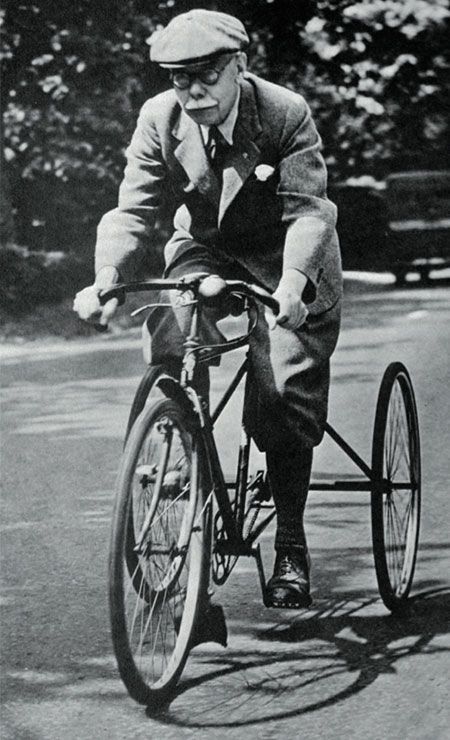
Left to Right: Dave Duffield (Trike) 1960, Jack Rossiter 1929, Reg Randall 1958, Hubert Opperman 1934, Dick Poole 1965, Sid Ferris 1937 and Dave Keeler 1958. Any cycling organisation would be proud to have this photo in its
archive.
Note from editor: It’s a pity that the Pedal Club only has this print, which is on matt paper and so is less sharp than it would be on gloss paper. Is it possible that some one might have access
to this photo in some other form?
Left to right: Steve Pontin?, Brodnam, F.A. Dredge, L.A. Gebel, H.H. England (end of table),
L.F. Dixon,
Jack Lauterwasser, Harold Briercliffe.
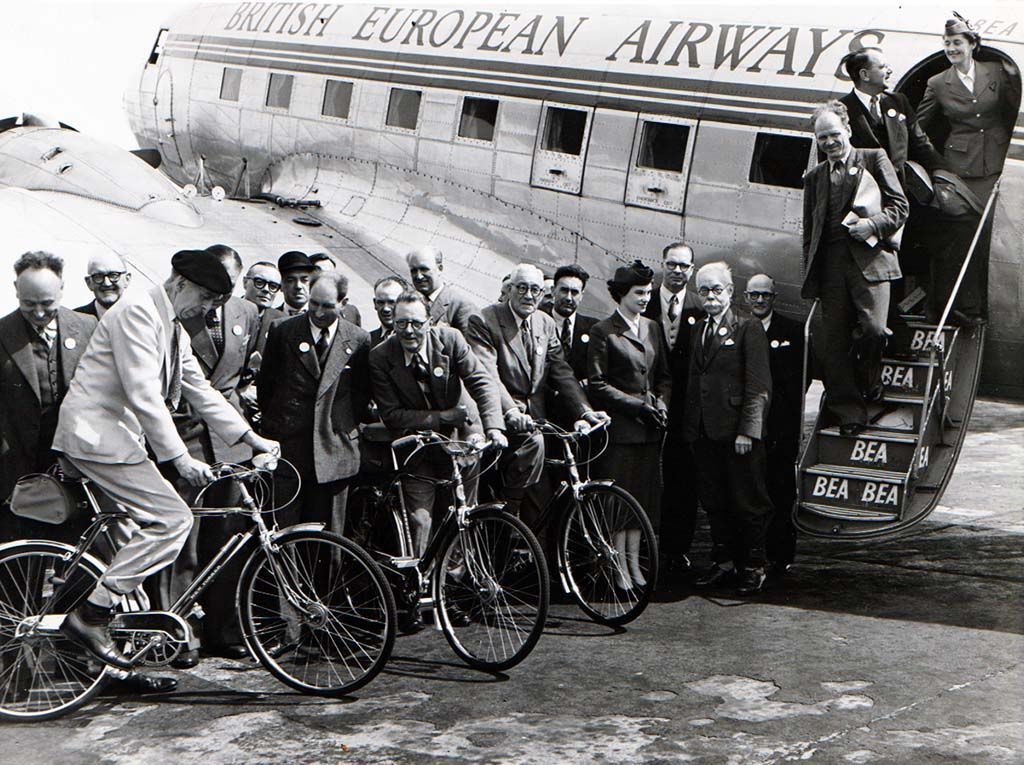
The party flew from Northolt to Birmingham and back the same evening.
(Ed:Difficult to name them all but), on the left with beret sitting on a bike is Robert Williamson, and apparently looking at the bike, Harry Ferris. To the right of the stewardess is Stan Butler and to her left is G.H. Stancer (white hair and moustache).
George Herbert Stancer OBE was an English racing cyclist of the late 19th century who became one of the administrators of the British Cyclists' Touring Club after World War I. He is commemorated by the annual juvenile 10-mile "GHS" individual time trial championship.
Born: 17 April 1878, Yorkshire
Died: October 1962 (age 84 years)
With thanks to Chris Lovibond for most of the captions
In spite of rain, great age and the tube strike, Alan Jacob arrived in good spirits as guest ofhonour, for the club’s September meeting. He was accompanied by his sons, David and
Robert. This meeting was a celebration of the Condor Mackeson professional team which existed from 1961 to 1970. Alan was the team’s most successful rider in its early years with
victories including the epic London-Holyhead race in 1963 and it was something of a coup to welcome him as guest speaker. The Condor Mackeson team was the brain child of the late Monty Young (founder of Condor), and represented a step change in cycling sponsorship in Britain as the first example here of financial backing from a business outside the cycle trade. It was Monty’s shrewd networking and enthusiasm which got Whitbread (the brewing company) on board with the rather thin claim that Mackeson Stout was good for athletes. Whatever the truth, the money was real and the sponsorship lasted for ten seasons, from 1961 to 1970.
It is interesting to note that Mackeson is now a ‘ghost’ brand – that is to say the brand still exists in the market but it is no longer advertised. Condor, by contrast, is still a market leader in its own sphere; probably not the outcome Whitbread expected. Monty was a prominent Pedal Club member, as is his son Grant who runs the business today and
maintains a strong link with the club.
Alan Jacob gave an account of his cycling career, which started with the now forgotten West Twickenham Road Club in 1952 at the age of sixteen. Like most aspirants of that time he began with time trialling and won his club’s junior BAR in 1953. The next year he moved to the more illustrious Clarence Wheelers, making further progress including recording 4.31.10 for a 100 mile TT, still as a junior! By 1956 he was doing National Service, which took him out of racing for two years but,
through his West Twickenham connection, he came to know Ken and Eileen Sheridan. Alan believes he gained significantly from Ken’s coaching which took place in the Sheridan’s ‘garage gym’ and this, at least by 1950s standards, seems to have been forward looking.
Staying with the Clarence he won their 1958 championship and the Hounslow road race, his first major road victory. In 1960 he had ten victories including a Tour of Britain stage and the Olympic Trial road race. This win did not bring Olympic selection, which naturally created feelings of some bitterness towards the amateur selectors, and this was a factor which pushed him into turning independent for the ‘61 season for the newly formed Condor Mackeson team.
For the next three seasons he was the most successful member of the team, a notable victory being that epic 1963 London to Holyhead race. A final pro season in 1964 for Ryall
Raxar proved to be enough for him and he decided it was time to get on with the rest of his life.
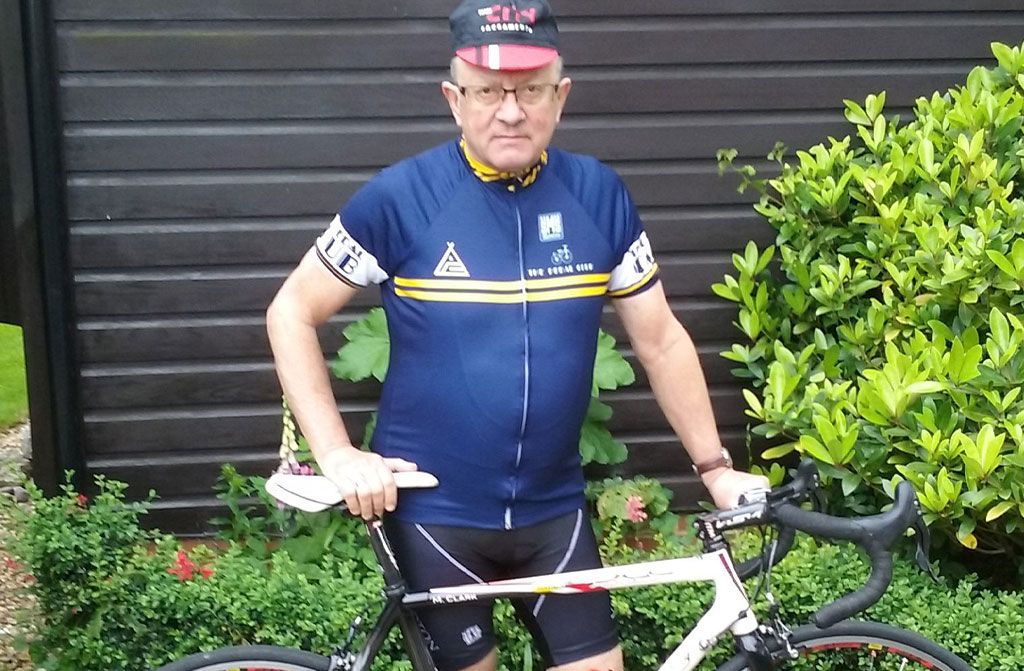
Alan Jacob was not the only speaker; he was supported by his sons Robert and David. They also spoke of their father’s career and presented their project bike – a replica of the Condor which their Dad used during the successful 1963 season. (photo). David described the difficulties involved in collecting the equipment which was originally entirely British made and intended to promote those products. Whatever the merits of the British kit may have been and however successful the pros were using it, the sad fact is that these component makers were near the end of the road and were soon to be overwhelmed by European and Japanese suppliers. Their demise was a serious blow to the British pro scene which, up to that time, had been mainly supported by the bike manufacturing and component trade. The outcome certainly shows Monty Young’s foresight in finding an ‘extrasportif’ sponsor in the Whitbread Brewery.
There was a second member of that early Condor Mackeson team present at this meeting: Doug Collins, who supported Alan in that famous London-Holyhead victory, taking the third place on the day.
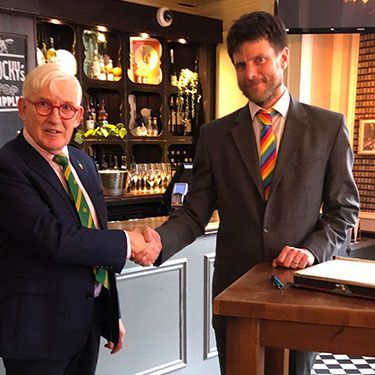
Two other features of the meeting were the presentation of a certificate of achievement to Chris Lovibond for his Eighty Miles in a Day at Eighty ride. This is the first new addition to
the register since its original formulation, but it is hoped many more will follow (see Pedal Club website for details).
More significant for the future of the club was the enrolment as a Pedal Club member of the distinguished cycling photographer, Phil O’Connor. We are confident that his work will bring a much improved standard to the recording of the club’s events.
The meeting attracted 53 members and guests and was held at the Civil Service Club in Whitehall.
Chris Lovibond
More Images of the event from Phil O'Connor's Smugmug page
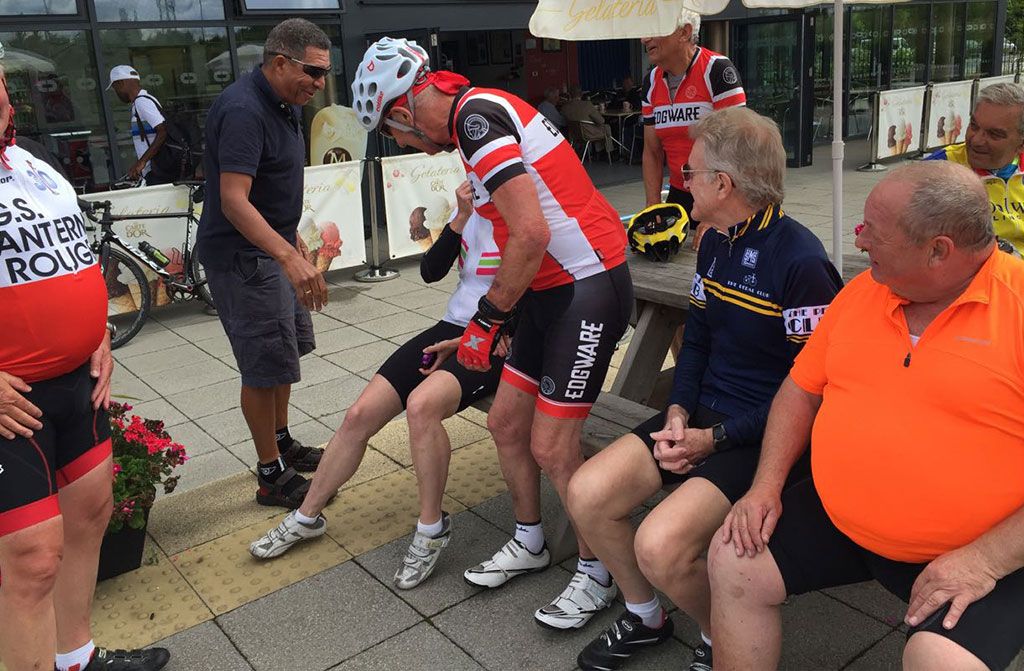
Presentation of a certificate of Achievment recieved by Chris Lovibond. Awarded fpr riding Eighty Miles In one day at 80 years old - Congratulations
Alan Jacobs arrived in good spirits as guest on honour for the clubs September meeting , he was accompanied by his sons David and Robert.

When you purchase through links on our site, we may earn an affiliate commission
All Rights Reserved | The Pedal Club