The Pedal Club Lunch Reports-
Chris Lovibond
Pedal Club Lunch Report – October 2026
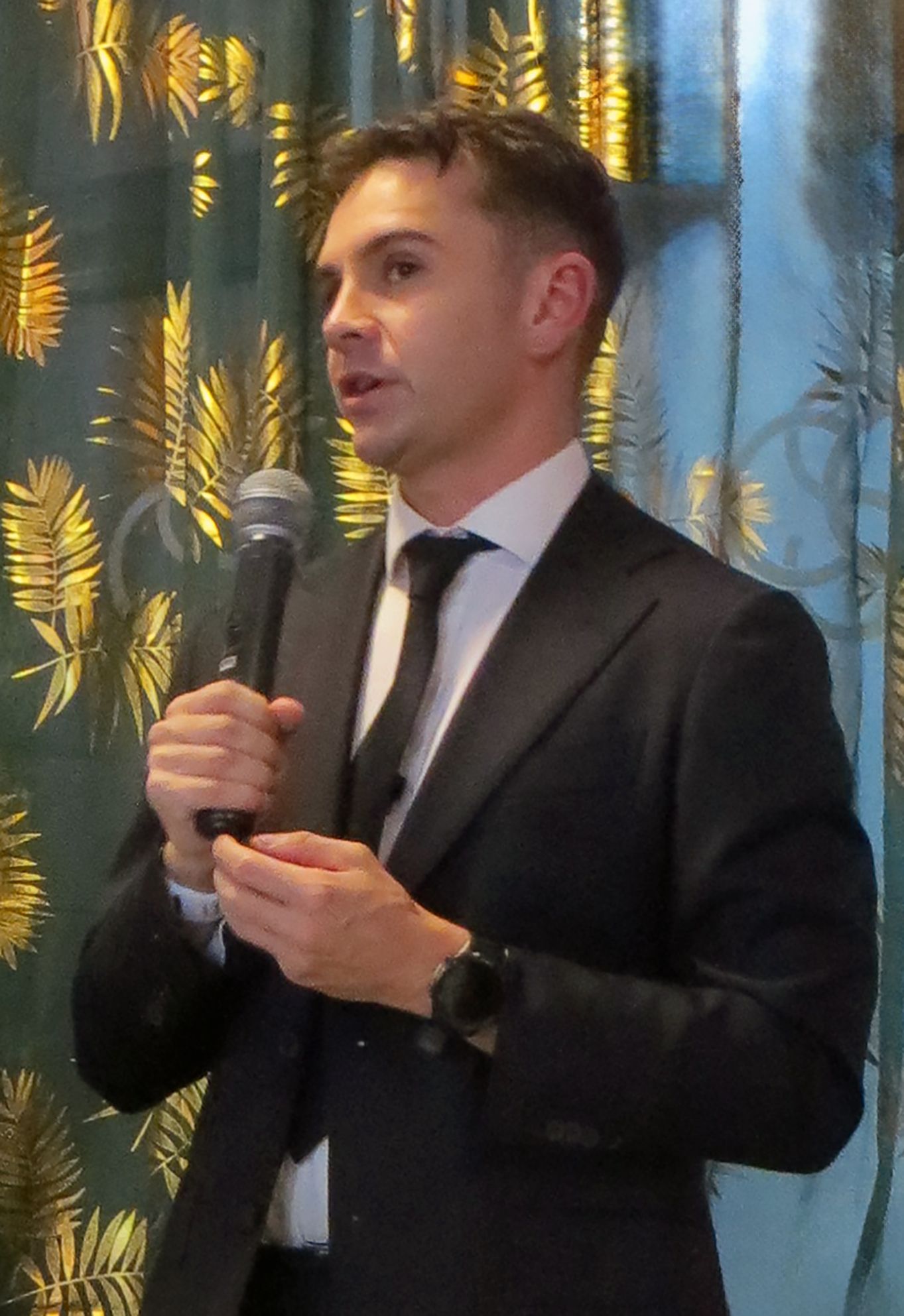
Connor Delves is a remarkable young man who has made the journey from a West Australia bike shop (his parents’ business) to the world’s stage, including Edinburgh, London and New York. He was the club’s speaker for October.
He came to the meeting fresh from the first London performance (well, the previous evening) of his show ‘Cadel – Lungs on Legs’. This is a one man play written, produced and acted by Connor and it was the story of this production that formed the basis of his talk. The play is an account of Cadel Evan’s victory in the 2011 Tour de France. Evans was the first Australian Tour champion and his winning ride was an inspiration to the young Connor who was fifteen at the time – an age to receive deep impressions.
Originally the idea of a one man show on this subject must have sounded an unlikely commercial proposition. As Connor said, cycling is not well represented in the theatre; it takes an imaginative leap to compress an activity which usually involves large outdoor spaces into the small area offered by a stage. This leap has been cleverly achieved by Connor putting himself on a bike on a turbo trainer on the stage, so he can ride the Tour, as Cadel, without moving at all. It does help that the bike in question is Cadel’s actual 2011 Tour bike.
What Connor has done is to bring two quite different disciplines together: cycle sport and the stage. He is a rare exponent of both, and this unusual match has produced a successful and original work which, as Connor says, has changed his life. It was perhaps just good fortune that Cadel himself does not like being in the limelight and so was happy to ‘delegate’ this to Connor who benefited from Cadel’s full co-operation. This included perfecting and authenticating the script and the use of Cadel’s equipment and clothing, including the real 2011 yellow jersey.
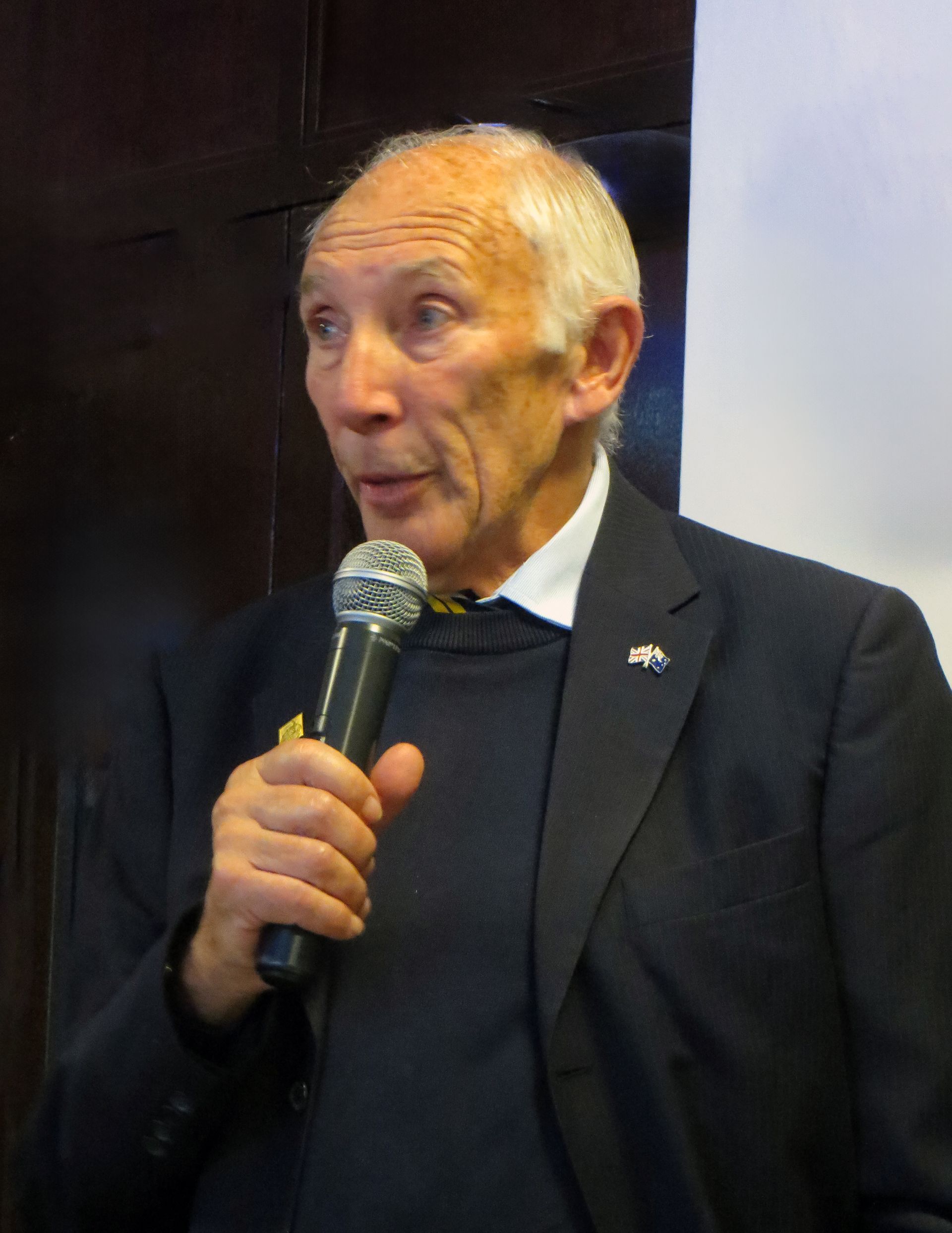
The production has also had the benefit of help from the Pedal Club’s own Phil Liggett whose commentary on that 2011 Tour was an important factor in winning over the young Connor as a road race enthusiast. In his speech of thanks, Phil said that when he read the script it ‘gave him goosebumps’, but Connor had already mentioned that ‘Without Phil, the show wouldn’t have been the same’.
So we have an original and obviously successful work which has already had one hundred performances and seems set for a great many more throughout the world. It is Connor’s hope that his play will bring more theatregoers into the orbit of cyclesport – an aspiration which seems likely to come to pass.
The meeting was attended by fifty members and guests, it was held at the Civil Service Club in Whitehall.
Chris Lovibond
October 2026.
The Pedal Club Lunch September 2026
Luke Anderson
was the speaker for September; he is the Cycling Development Manager for the Cyclopark at Gravesend, Kent. He gave a comprehensive account of the facilities and activities at the park, which now go a long way beyond just being a road circuit – the scope of its wide-ranging fitness and leisure activities can be found on its website:
https://cyclopark.com
The existence of the Cyclopark is not news to the Pedal Club since members made a significant contribution to its foundation and have given support over the years. However, we were pleased to hear that, in Luke's capable hands, the activities of the Cyclopark are developing well and that it is clearly becoming an important factor in the health and wellbeing of its catchment area. This is recognised by Kent County Council and Gravesend Borough Council; it's likely that this will give security for the continued life of the park.
Although many assume that the whole of South East England is prosperous, Kent does have significant areas of deprivation; a startling statistic mentioned by Luke is that 40% of local year six children (10–11 year olds) are overweight which, in twenty-first century Britain, is a good indicator of deprivation. For this reason Luke is keen to keep the park's prices 'a little cheaper than other similar facilities in the region'. The park had about 350,000 visits last year, so clearly something is being done right!
Perhaps the point which most endeared the members to Luke Anderson is that he is unquestionably a passionate clubman and racing cyclist who is keen to pass on his passion to new generations. Many Pedal Club members have devoted themselves to similar work and to find someone relatively young who has taken on this task is reassuring. One interesting word of caution from Luke: 'I may be one of the last to have come through the traditional club system and taken on a responsibility for the future'. Let's hope that he, at least, is successful.
The meeting was again held at the Civil Service Club and attracted forty-eight members and guests.
Chris Lovibond
September 2026
Luke Anderson was the speaker for September; he is the Cycling Development Manager for the Cyclopark at Gravesend, Kent. He gave a comprehensive account of the facilities and activities at the park, which now go a long way beyond just being a road circuit –.
After his talk Luke was immediately proposed and seconded for membership of the Pedal Club. This is quite unusual, but it was met with much approval from the membership in the room.
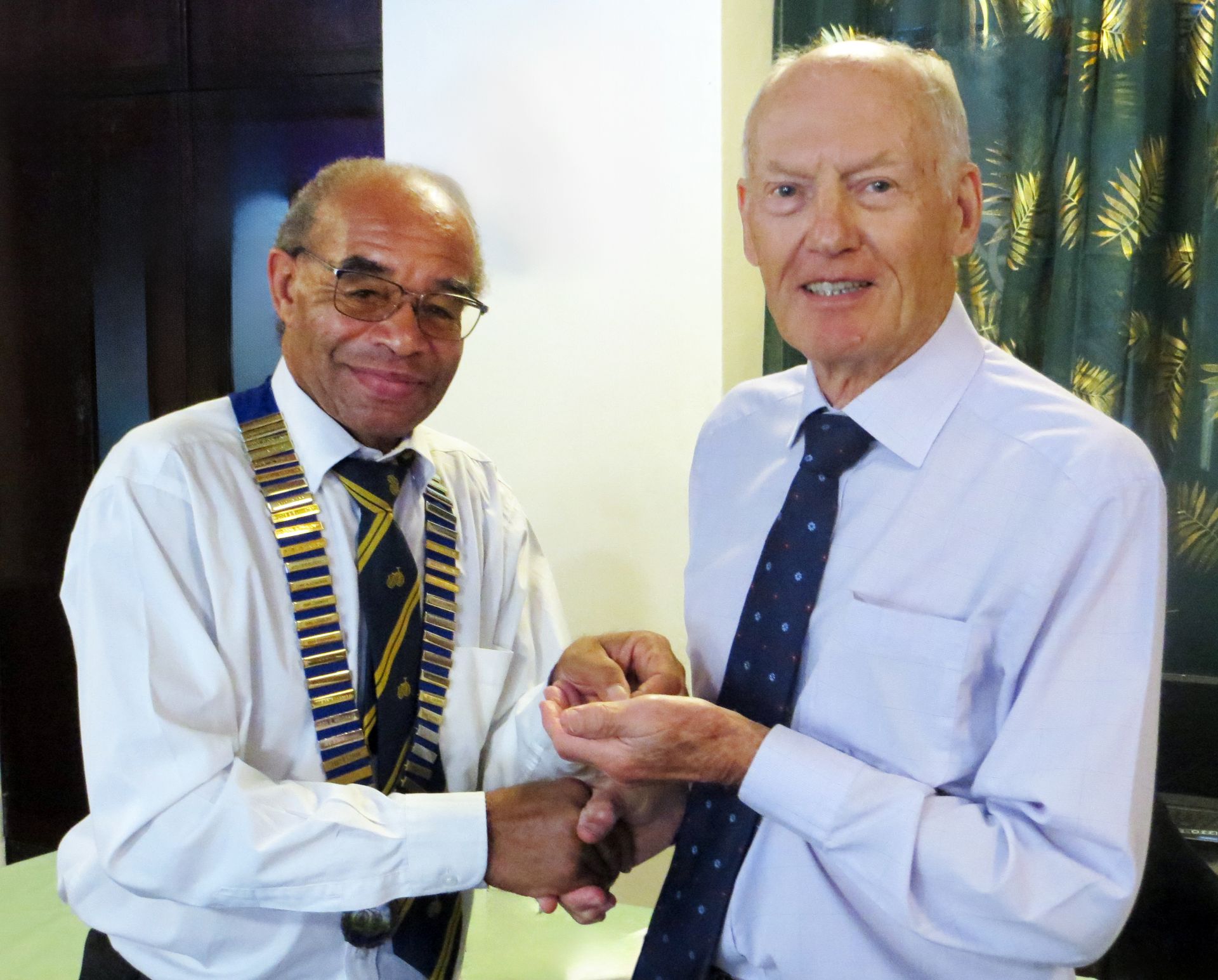
One other event at the meeting was the acceptance into membership of Roger Smith of the Festival Road Club. The photo shows the President, Charlie Allen, presenting Roger with his club badge.
Read more......
The Pedal Club Lunch August 2026
August brought us another super-hot day, and with a relaxed dress code in operation, rather more legs than usual were on display!
Unfortunately, we were without a guest speaker this month, but we did have a very special guest in our 2026 Bursary Award winner, Olivia Smallshaw, who joined us for lunch with her dad, Nick.
Fortunately for Olivia, two of our youngest members, Hope and Ellen Inglis, were also there and spent much of the lunch chatting with her. This meant she was spared too many tales from some of our more mature members – whose stories, rather like fine wine, seem to improve with age!
We were also delighted to welcome two new members, Huw Williams and Colin McDermott, who were presented with their Pedal Club badges.
There was a sudden increase in attention around the room when Max stood up to announce the winners of the Tour de France lottery. Some members were fortunate enough to collect not one but two prizes, while many others – myself included – left empty-handed. Once all the prizes had been distributed, Max was pleased to announce that the lottery had also made a small profit of £60 for the club coffers.
It was then time to formally introduce our special guest, Olivia Smallshaw. Steve Wright read out her latest palmarès, which is already remarkably impressive. Currently the No. 1 ranked Female Youth ‘A’ rider in the UK, Olivia recently won the Under-16 Girls Race at the Otley Cycle Races, finished second in the RTTC National Junior 25-mile Championship, and collected three silver medals – in the Elimination Race, Madison Race and Points Race – at the 2026 National Youth & Junior Track Championships.
Phil Liggett then took the microphone to talk a little about the current cycling scene before interviewing Olivia about her recent successes and her ambitions for the future. At just 15 years old, what she has already achieved in her cycling career is nothing short of remarkable.
Phil then presented Olivia with a small plaque as a memento of receiving the Pedal Club Bursary Award 2026, while our President presented her with one of the club’s 85th Anniversary polo shirts.
The lunch was attended by 42 members, old and new, and once again we thank the CSC for their excellent hospitality.
The Pedal Club Lunch July 2026
The Pedal Club Lunch June 2026
The Pedal Club Lunch March 2026
The Pedal Club Lunch February 2026
In a change from the standard format this meeting had two speakers and, although they were both linked to the Community Cycle Workshop, their
connection was quite different.
Dondorebarwe Sakutombo had ridden the 2025 Rapha Festive 500 kilometres charity event, but he didn't do it the easy way, his ride was done in one hit at Herne Hill - on a Brompton!
This event has become an established feature of the track calendar and has been run each year since 2020. There are places for ten riders who each
nominate a charity of their choice - our speaker's contribution went to Community Cycle Workshop.
Dondo told us that he grew up in a deprived area of inner London where children's cycling didn't really happen. It wasn't until he got to university (Newcastle) that he discovered bikes and their possibilities and, encouraged by friends, he rode an event from Newcastle to Edinburgh (120 miles by A1, but suggested bike route 174 miles). He was bitten from that first long ride; already a runner, a career in triathlon beckoned. Now a hospital consultant he says he is too busy to race, but clearly in the distant future he may become a formidable competitor as a veteran cyclist.
He made two good points: an inappropriate bike in a charity event draws attention in a useful way, and that resilience on a bike leads to resilience
elsewhere in life.
Our second speaker was Stewart Vanns who founded Community Cycle Workshop in 2012. Stewart was involved with Bikeability as an instructor, but
he became aware that there were many children who could not take part because they had no bike, or the bike they did have was unusable and they didn't have the skill or money to effect repairs. He was also aware that large numbers of repairable bikes are thrown away, usually because the cost of repair is beyond the owner's means.
In a light bulb moment Stewart saw the need for a service to improve children's repair skills and to stop some of the very non-eco waste of destroying easily repairable bikes. This has proved to be an excellent idea, and since starting he and his workshop partner, Matthew Beale-Collins, have helped over 6,000 children to become competent amateur cycle mechanics - an essential part of being a real cyclist. Many of his students come from deprived backgrounds which make both the mechanical and travel aspects
even more important to them.
Community Cycle Workshop is based on a simple but excellent idea, and members responded with enthusiasm. At the lunch £210 was collected in cash for this charity; the club will double this amount from its own funds.
Another feature of this meeting was the presentation of the R.W. Williams silver cup for the Clubman of the Year to Mike Clark (see photo). Mike is a vital cog in keeping the club's now on the road. Apart from being assistant treasurer he fulfils many other important but largely unseen roles. Congratulations Mike - we hope you can keep up the good work long into the future.
There were forty four members and guests in attendance at the Civil Service
Club in Whitehall.
Chris Lovibond,
February 2026.
The Pedal Club Lunch January 2026
The Pedal Clubs January meeting included its AGM which was efficiently completed without controversy. As is usual for the club there was no speaker at this lunch.
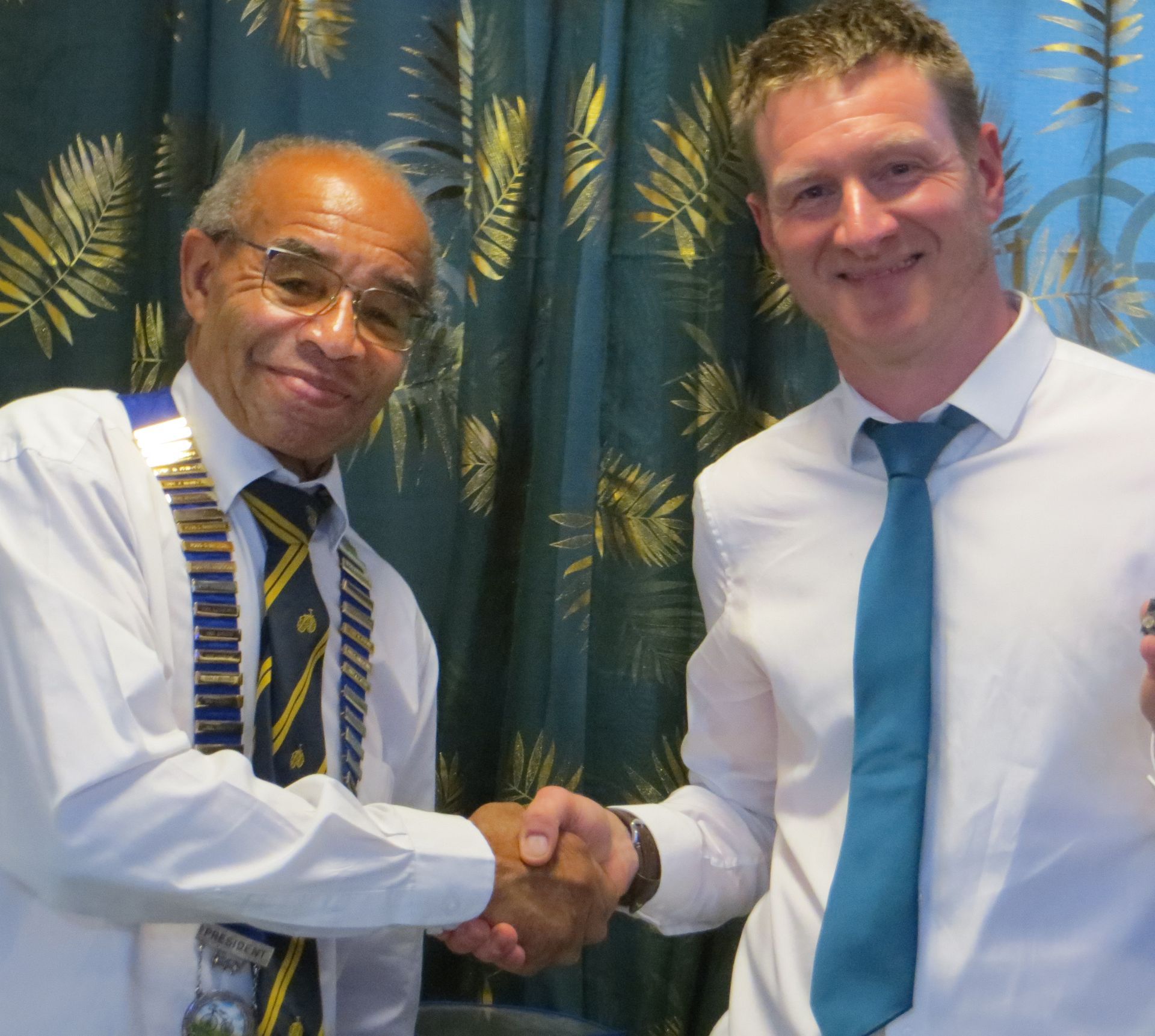
The main interest in this meeting was the inauguration of a new president when the 2025 president, John Wheatley, handed on the chain of office to Charlie Allen. G.H.Stancer, the clubs founding chairman and leading light in the early days, would certainly have approved of this appointment since his original intention was that the club
should be able to present and promote cyclists views at government level. Charlie Allen is a member of The All Party Parliamentary Group for Cycling, Walking and Wheeling - in a nutshell, they advise the government on its active travel policy.
Although it would be foolish to expect this committee to achieve dramatic improvements in the affairs of British cyclists, at the very least Charlie has a chance of making our voiceheard in Westminster. His new title of President of the Pedal Club will do him no harm in
this task.
The meeting was held at the Civil Service Club in Whitehall and attracted forty five members.
Chris Lovibond
January’26.
The Pedal Club Lunch November 2025
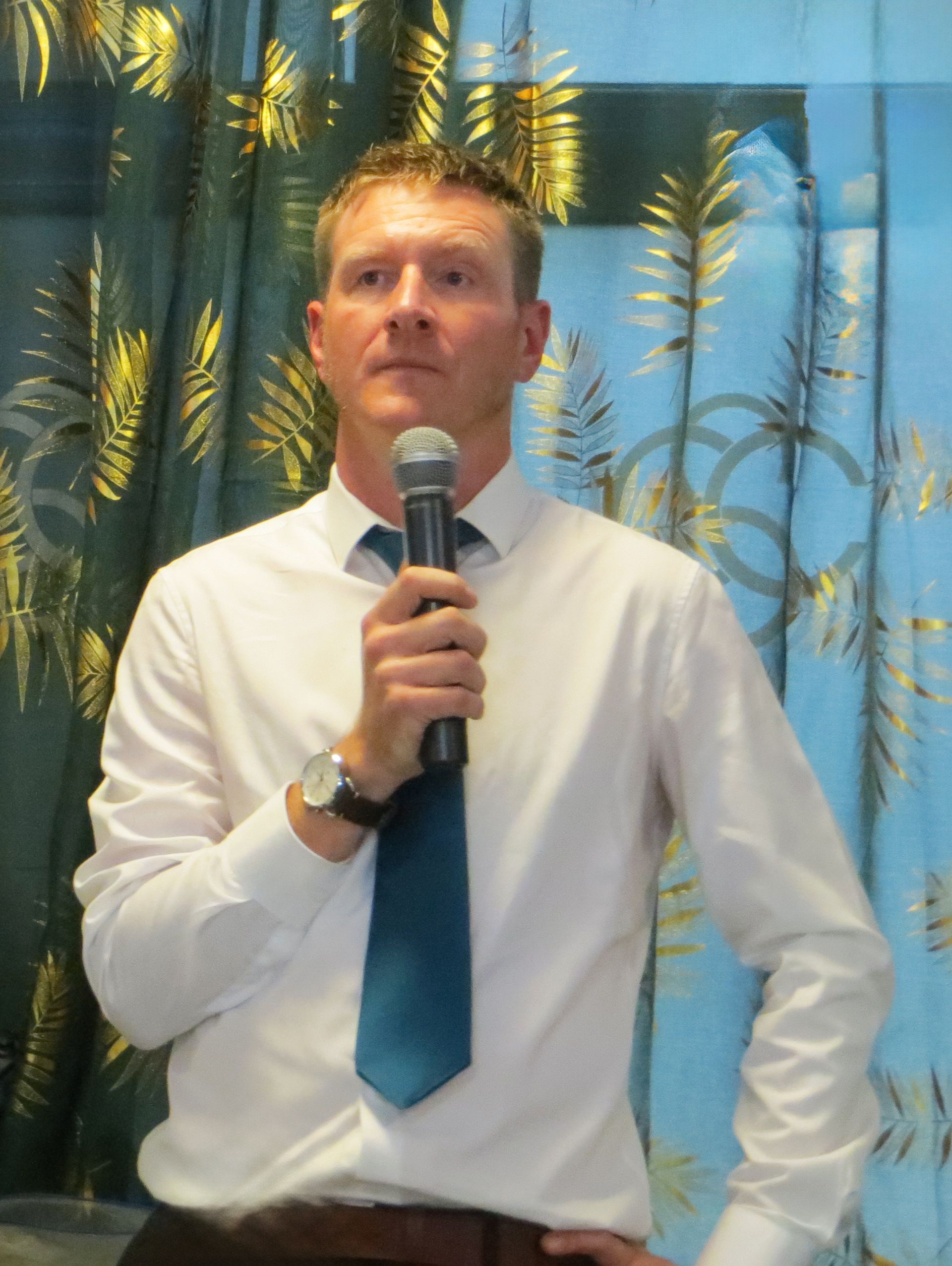
There were many who doubted the wisdom of holding the World Championships in Rwanda, but Jeremy Ford, the speaker for November, gave the club an account which showed there were many benefits. Jeremy has a long term interest in African cycling and has been involved in the promotion of Team Africa Rising for the past decade. He told the club that the races were well run and that the government had made sure there was adequate financial support.
The road race course was certainly tough, hard enough to make the world’s best struggle, and in fact in the elite men’s race there were only thirty finishers from one hundred and sixty four starters. However, the difficulties made the racing interesting – it was ‘oldfashioned’ in one important respect: most riders turned off their Garmins. This was because the conditions (altitude and heat) made all performance figures abnormal and therefore useless; spectators like riders needing to use their own judgements about how to race.
The main point the speaker made was that these championships should have a significant effect on African cycling generally. The races were covered by the world’s media, which naturally includes Africa and this meant that young people there saw, for the first time, African riders competing at the highest level.
In some parts of the world cycling is just seen as transport for the poor, but Africa is different and bikes are valued. Yes, they are used for work and transport, but there is also a genuine joy about riding, something less and less true in car saturated Europe. Although it must be admitted that football is Africa’s leading sport, cycling is coming up strongly, particularly in the eastern countries and the big world tour teams are now actively looking for African talent (there are already 140 Africans in world tour teams). The sport has come a long way from Tom Richie’s involvement in the 2006 ‘Wooden Bicycle Classic’.
African racing cyclists are now better equipped, although there are still some problems. Naturally, riders want the best modern kit but there can be confusion about what is really best for the conditions. ‘Hi Tech’ can be a bit too advanced for the current situation – for example at this championship some riders wanted to use a 12 speed electric change system but were disappointed to discover that there were only 11 speed chargers (different system) available in the whole continent. It’s necessary to understand that the best kit is what is suitable for local conditions. As a tiny contribution to this problem the Pedal Club is giving £500 to Jeremy’s cycling charity.
It has been suggested, erroneously, in the past that the Pedal Club membership is too old to do anything significant. In fact the club does have a few young members, but some of
the older ones are pretty active. At this meeting member Malcolm Freeman, freshly returned from the UCI world track championships at Roubaix, displayed his two silver medals won at this year’s event. He rode in the 75 plus age group and gained second place in both the points race and the pursuit. Congratulations and thanks to Malcolm for demonstrating that Pedal Club members can compete at world level.
The lunch attracted forty seven members and guests and was held at the Civil Service
Club.
Chris Lovibond,
November 2025.
Malcolm Freeman, freshly returned from the UCI world track championships at Roubaix, displayed his two silver medals won at this year’s event.
Jeremy Ford, the speaker for November,
Pedal Club Lunch, October 2025
The Pedal Club always strives to find interesting and prominent speakers and October’s guest was of the highest quality – Mark Cavendish. His invitation was based on the need for a signature on his Golden Book page, but we hoped we would learn more about the man and his career; we were not disappointed. After an introduction by Phil Liggett, Mark gave a brief acceptance speech: he made it clear thathe was well aware of the significance of the Golden Book, which has been signed by all the greats of British cycling since the nineteen thirties. His understanding of cycling history was also emphasised by his comment – ‘I always loved the club system, which was my start. Now it’s not doing so well, I wish we could do something to help it.’ We learned morefrom the later question and answer session.
On the pro scene, he told us that there is worry in some quarters that team budgets are unsustainably high, risking the possibility of a collapse. Perhaps following on from thispoint, he feels that pro cycling is becoming disconnected from the rest of the cycling world. It was once the pinnacle; now it seems to have become a thing apart. As for signing pro contracts at sixteen, he believes this is too young and that some sort of apprenticeship scheme should be available. He told us that his own son already thinks, incorrectly, that he
is a pro cyclist!
The UCI, he said, is easy to criticise, but he is sympathetic to many of the technical restrictions the organisation imposes, for example handlebar width regulation. There is pressure from those who want to popularise new products, but while technical advancemay have benefits, it should not affect the attractiveness of the sport, particularly in respect of safety.
Of himself he said that originally he wasn’t interested in fame, just wanting to ride and
race. He recognised his good luck in having enjoyed a great career which had allowed him to meet a wide range of interesting people. Asked for his best career moment he replied:
‘Retiring, and taking the computer off my bike.’
It was clear that Mark was aware that his experiences had developed him as a person,and after hearing him it is easy to believe that, while some of his early press coverage was
not always flattering, the mature Mark Cavendish will be an excellent ambassador for cycling.
Unsurprisingly, this meeting attracted more would be attenders than the dining room at the Civil Service Club has room to hold, so the number was the maximum possible: sixty five.
Chris Lovibond,
October 2025.
Pedal Club Lunch, May 2025
Nature's Symphony
Breathtaking colors of our planet
Faces of Humanity
Portraits of people from around the globe
Sands of Time
Stark beauty of desolate dunes